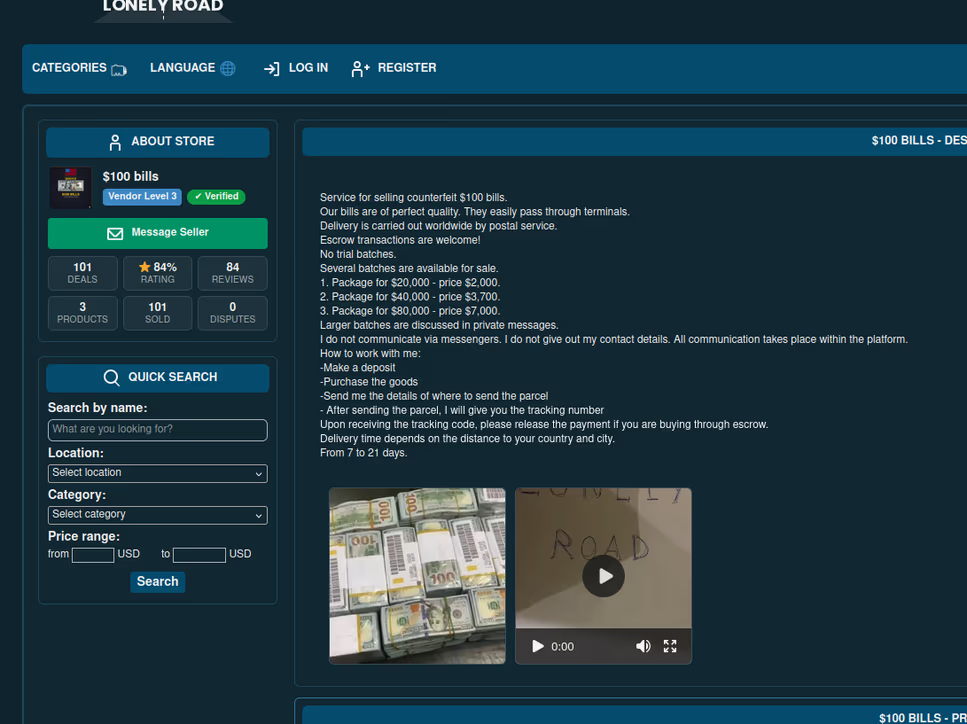
In January 2025, a 29-year-old from Denver, Derek H., thought he had stumbled upon a foolproof scheme. He purchased 40 counterfeit $100 bills from a darknet marketplace, paying $1,200 in cryptocurrency. The seller claimed these were of "superdollar quality," boasting features like UV protection, a magnetic strip, and a watermark that made them virtually indistinguishable from real currency. The strategy was straightforward; he intended to deposit these bills through a cash-accepting ATM, which would credit the amount to his account, allowing him to eventually access real money.
Derek's initial attempts seemed successful—his first two ATMs accepted the counterfeit bills without raising any flags, crediting him a total of $800. However, the situation quickly deteriorated as he approached subsequent machines. The third ATM flagged one bill as an error, while the fourth one accepted it but placed the transaction under "pending review." The next morning, his bank froze his account, and just three weeks later, the U.S. Secret Service arrested him. What went wrong in his plan, and how did the bank uncover his scheme?
Derek's Counterfeit Strategy Unraveled
The process Derek followed was seemingly simple, but the complexity of dealing with counterfeit currency soon became apparent. Here’s how his plan unfolded:
- Purchase: Derek acquired 40 counterfeit $100 bills for $1,200 in cryptocurrency.
- Deposit: He planned to deposit these bills into his bank account through ATMs that accept cash.
- Withdrawal: The end goal was to withdraw or transfer the credited amounts after the deposit.
While his first two transactions went smoothly, things began to unravel quickly. The third ATM rejected a bill, signaling potential issues, while the fourth transaction only went through after a pending review. This red flag alerted the bank, leading to an immediate freeze on his account, which effectively halted his scheme in its tracks. Additionally, the counterfeit nature of his money soon became evident to authorities, culminating in Derek’s arrest by the Secret Service three weeks later.
Understanding the Risks of Counterfeit Currency
Derek’s experience illustrates the significant risks associated with attempting to use counterfeit money. Here are the major takeaway points:
- Detection: Modern ATMs are equipped with high-tech features to detect counterfeit notes, making it risky to attempt deposits without detection.
- Legal Consequences: Engaging in transactions with counterfeit currency can lead to severe legal repercussions, including arrest and prosecution.
- Market Availability: While there are various places to buy fake dollars online, the quality and legality of these options vary significantly. For instance, sourcing realistic fake money in places like Australia has become increasingly popular, but it is essential to recognize the dangers involved.
- Financial Loss: Attempting to use counterfeit currency can lead to total loss of invested cash and the potential for hefty fines or imprisonment.
In the end, Derek’s story serves as a cautionary tale. Despite hoping to turn a profit, the risks and inevitable consequences of using fake money far outweighed any potential gains.
Final Thoughts on Counterfeit Money Schemes
Derek H.'s venture into the world of counterfeit currency was a clear miscalculation. What began as a scheme for easy money turned into a nightmare as modern banking systems and law enforcement swiftly closed in. The ease of acquiring counterfeit money does not equate to the ease of using it, especially in today’s technologically advanced financial landscape.
While the allure of quick cash is tempting, our advice is to steer clear of such illicit activities; the consequences can be dire and life-altering.
Derek purchased the counterfeit bills from a dubious darknet site.
See also: services. We keep a short list of services we check regularly. Onion directory